Choosing the right technology stack is one of the most important decisions when developing a mobile application. The technologies you select directly affect your app’s performance, scalability, security, development cost, and user experience. Whether you are building a startup application or a large business platform, selecting the right combination of programming languages, frameworks, databases, and development tools can make a significant difference.
A well-planned technology stack helps businesses build reliable applications that can grow with changing market demands. N&M App Store Solutions helps businesses turn their app ideas into scalable digital solutions through modern mobile app development technologies.
What Is a Technology Stack in Mobile App Development?
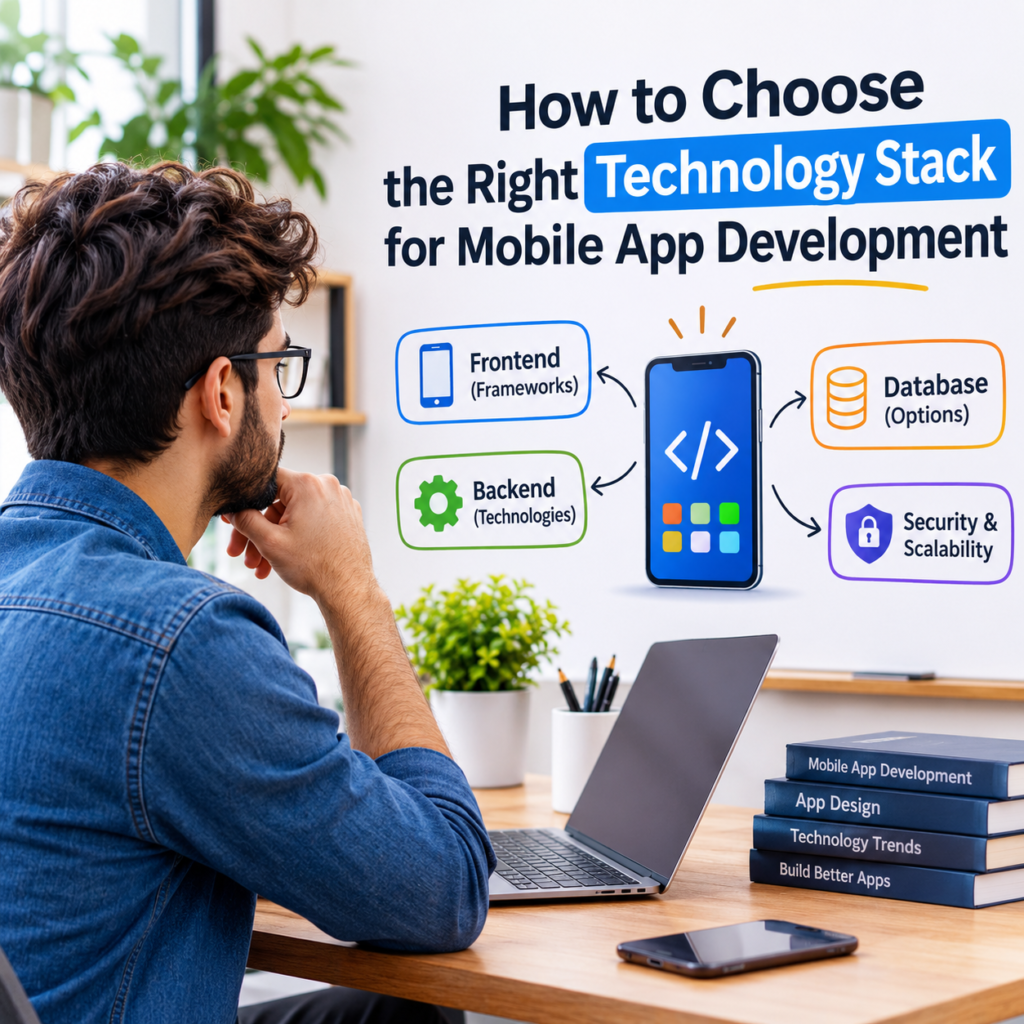
A technology stack is a combination of programming languages, frameworks, libraries, databases, and tools used to develop and operate a mobile application.
It generally includes four major components:
- Frontend: The part of the application users interact with, including screens, buttons, and navigation.
- Backend: Handles business logic, authentication, server operations, and application functionality.
- Database: Stores and manages application data, user information, and transactions.
- APIs and Integrations: Connect the application with third-party services, payment gateways, and other platforms.
All these components work together to deliver a smooth and reliable application experience.
1. Understand Your App Requirements
Before selecting any technology, identify what you want your application to achieve. Different applications require different technologies.
For example, an eCommerce application may require payment gateway integration, product management, and inventory tracking. On the other hand, a social networking application may need real-time messaging, media sharing, and notification systems.
Consider the following factors:
- Application purpose and target audience
- Required features and functionality
- Expected number of users
- Security and data requirements
- Integration with third-party services
- Future scalability requirements
Understanding these requirements will help you avoid unnecessary development costs and technical limitations.
2. Choose the Right App Development Approach
One of the biggest decisions is selecting between native, cross-platform, and hybrid app development.
Native App Development
Native applications are developed specifically for Android or iOS using platform-specific technologies. Kotlin and Java are commonly used for Android, while Swift is widely used for iOS.
Native development is suitable for applications requiring high performance, advanced device features, and platform-specific experiences.
Cross-Platform App Development
Cross-platform development allows developers to build applications for multiple platforms using a shared codebase.
Popular technologies include Flutter and React Native. This approach can reduce development time and simplify maintenance.
Hybrid App Development
Hybrid applications combine web technologies with native application components. Technologies such as HTML, CSS, and JavaScript are commonly used.
This approach can be useful for applications with relatively simple requirements and limited development budgets.
3. Select the Right Backend Technology
The backend manages the application’s core functionality, data processing, authentication, and communication between different components.
Some popular backend technologies include:
- Node.js for scalable and real-time applications.
- Python for applications requiring flexible development and data processing.
- PHP for web-connected applications and backend services.
- Java for enterprise-level applications.
- .NET for business applications and enterprise integrations.
Your backend selection should depend on application complexity, expected traffic, development expertise, and integration requirements.
4. Choose a Suitable Database
A database stores application information and makes it accessible whenever required.
Some commonly used database technologies include:
- MySQL for structured relational data.
- PostgreSQL for complex data management.
- MongoDB for flexible document-based data.
- Firebase Firestore for real-time application data.
- SQLite for local device storage.
The right database depends on your data structure, application requirements, security needs, and expected growth.
5. Prioritize Security and Scalability
Security and scalability should be considered from the beginning of development rather than added later.
Your technology stack should support secure authentication, encrypted data transmission, access controls, regular updates, and reliable backup systems.
Similarly, choose technologies that can handle increasing users, growing databases, and additional features without requiring a complete application rebuild.
6. Consider Development Cost and Maintenance
The cheapest technology is not always the most cost-effective option.
Some technologies may reduce initial development expenses but require more maintenance or additional resources as your application grows.
Before making a decision, evaluate:
- Development time and overall budget
- Availability of skilled developers
- Licensing and infrastructure costs
- Long-term maintenance requirements
- Community support and documentation
A technology stack should support both your immediate requirements and long-term business objectives.
Conclusion
Choosing the right technology stack is essential for building a successful mobile application. From selecting the development approach to choosing backend technologies and databases, every decision influences application performance, security, scalability, and maintenance.
Businesses should focus on their application requirements, target audience, budget, and future growth before finalizing their technology stack.
N&M App Store Solutions helps businesses develop modern, scalable, and user-friendly mobile applications using suitable development technologies. Contact our team to discuss your mobile app development requirements and turn your business idea into a practical digital solution.
Frequently Asked Questions
1. What is the best technology stack for mobile app development?
There is no single best technology stack. Flutter, React Native, Kotlin, Swift, Node.js, and other technologies can be suitable depending on application requirements.
2. Which is better: Flutter or React Native?
Flutter offers a consistent UI experience through its rendering approach, while React Native allows developers to build applications using JavaScript and React concepts. The right choice depends on project requirements and team expertise.
3. Is cross-platform app development cheaper than native development?
Cross-platform development can reduce development time and costs because developers can reuse code across platforms. However, the final cost depends on application complexity and required functionality.
4. Which database is best for mobile applications?
MySQL, PostgreSQL, MongoDB, and Firebase Firestore are popular options. The best choice depends on data structure, performance, and application requirements.
5. Can I change my application’s technology stack later?
Yes, but changing the technology stack can require significant redevelopment, testing, and migration work. It is better to make a well-informed decision during the planning stage.